Update Shopify Continue Selling When Sold Out
How to Hide Out-of-Stock Inventory on Shopify
Whether it's a new store launch or a brand new product, you want your goods available to customers as soon as possible. However, this is easier said than done. Hiding out-of-stock inventory on your Shopify store can be difficult, especially if you do it manually. Here are a few ways to hide out-of-stock inventory on Shopify:
Option 1: Unpublish it
One of the easiest ways to hide a Shopify product is by unpublishing it from a sales channel. This requires manual effort.
Follow these steps to unpublish a Shopify product from a sales channel,
- Go to the product catalog.
- Open the details of a product.
- Click on Manage in the top-right corner of the Sales Channels and Apps section.
- Uncheck the sales channel.
- Click Done.
- Click Save.
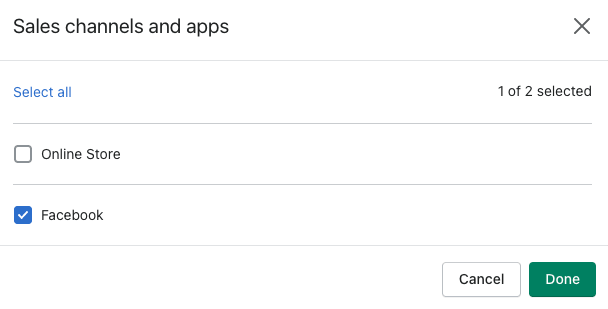
Source.
At this point, the product is hidden from your store, and no one can purchase the item.
Option 2: Set as draft
Another manual option is to set the item as a draft so it's no longer visible or purchasable on your channels.
Follow these steps to set a product to draft status:
- Go to the product catalog.
- Open details of a specific product.
- Find the Product status section in the top-right corner.
- Click on Active and change it to Draft.
- Click Save.

Source.
Now your product is hidden throughout your channels, and no customer can see or purchase it from your store.
Option 3: Set automatic collection rules
If you use automatic collections rules, there's an option to display only in-stock products. With this method, there are no potential 404 errors as your product pages are accessible through direct links only, and there's no manual labor involved.
Follow these steps to set automatic collection rules:
- In your Shopify store admin, click Products, then Collections.
- Select a collection.
- In the Conditions section, click Add another condition. If you don't see any Conditions section, your collection isn't automatic, and you won't be able to continue with this method.
- Then, from the drop-down menu, select Inventory stock, is greater than, and 0.
- Click Save.
Your product is no longer visible on your collections page.
Option 4: Use Back in Stock
Instead of hiding your out-of-stock products, you can set up back-in-stock alerts. Back in Stock notifies your opted-in customers when your product is in stock again, persuading them to go back to your store to complete a purchase.
To set up Back in Stock notifications, follow these instructions:
- Install Back in Stock by visiting the Shopify App Store and clicking Add app.
- Next, go to the product page of your out-of-stock product and find the Email when available button next to the Add to cart button.
- Click on the button.
- Type in your email address to signup for a product notification.
Back in Stock can manually set it up if you don't see the button. Just email support@backinstock.org with the URL of the product page.
These are the four most common methods to hide your out-of-stock products. Let's examine why you shouldn't hide your inventory and what you should do instead.
Managing inventory is always a delicate balancing act. Too much stock can tie up valuable capital and lead to costly storage fees, while too little can result in lost sales opportunities. That's why it's important to strike the right balance when stocking your shelves. One way to do this is by hiding out-of-stock items from view. But what if we told you there was another way that brought you more leads and (potentially) more sales? There is, and it's called Back in Stock.
Let's look at why you should use Back in Stock alerts and review how other brands use them to stay engaged with their customers.
How Back in Stock Alerts Work
Instead of choosing whether to display or hide your out-of-stock products on Shopify, Back In Stock alerts let you replace the "Buy" button with a customizable message to "Notify me when the product is available."

Back in Stock alerts for Shopify let customers get notified by text or email when a sold-out product is available, so there's no need to hide popular items or push them to the bottom of your store's page when they sell out.
You can change the button's wording and style, so it blends seamlessly into your site. Then when you restock your inventory, Back In Stock will send your customer an email or text message letting them know they can complete their purchase.

Customers can choose to be notified by email or text message when the product is back in stock, and all of the forms and messages can be customized to fit your brand.
So, even though you're not doing any work beyond your regular inventory tracking, you have an app moving the needle on your sales.
The NASH Collection , a lifestyle brand that embodies love for Nashville, uses Back In Stock alerts across their site and says, "I can't tell you how excited I am to have installed this app. It's tripled my online sales… easy!"
For any eCommerce store owner, tripling sales is a big win. So if you have any inventory that tends to sell out, setting up these alerts is a no-brainer.
Digging into Back In Stock analytics opens up a whole new data category for your analytics that can help you can lower inventory risks and overhead.
You know you can order big if a product has a massive waitlist. You can continue with smaller orders if another product has a short waitlist. If a product has no waitlist and isn't moving? It's probably time to think about discounting or discontinuing it.

Kim Kardashian West's popular Skims shape & loungewear brand uses Back In Stock alerts to create product waitlists for sold-out colors and sizes.
Big fashion brands, like Kim Kardashian's Skims , use Back in Stock alerts to create wishlists for out-of-stock items. Wishlists create a great customer experience, but they're also a secret weapon for Shopify store owners.
K Beauty eCommerce store, Go Bloom & Glow , says waitlists are a crucial part of their inventory management strategy. "I know what products to stock up next… It also helps determine which products to discontinue selling by providing data on which product has the shortest waitlist or none."
So, in addition to reducing missed sales, you're getting valuable insight into the overall demand for your various products.
Now, let's review how companies use Back in Stock instead of hiding their out-of-stock products.
Source: https://backinstock.org/blog/shopify-inventory-hide-out-of-stock/
0 Response to "Update Shopify Continue Selling When Sold Out"
Post a Comment